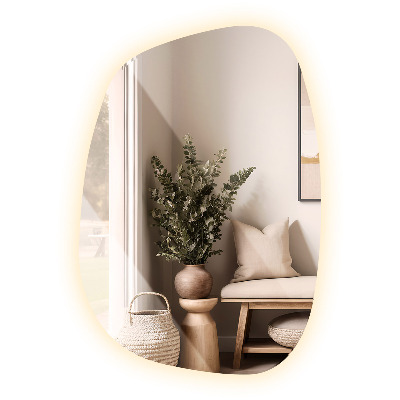
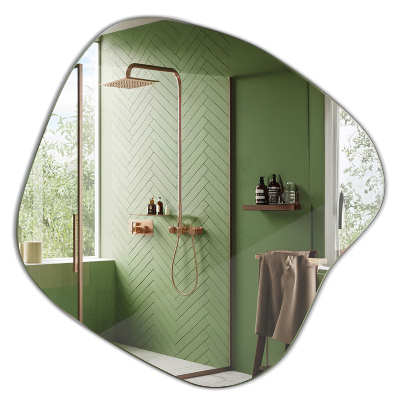
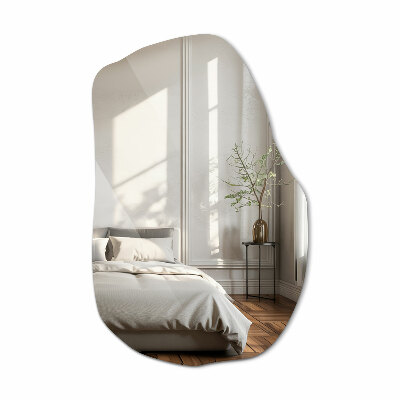
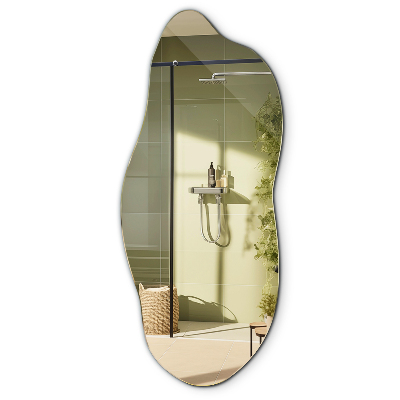
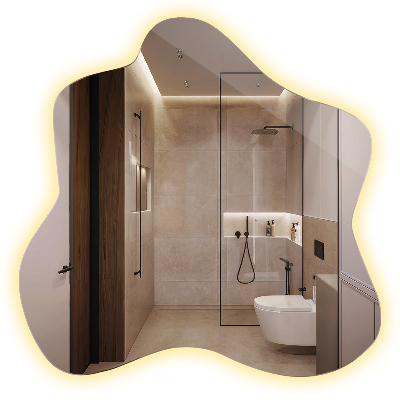
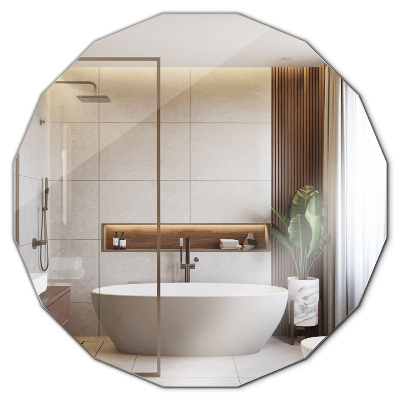
Until recently, a mirror was associated primarily with the practical furnishings of a bathroom, bedroom, or hallway. It had a rectangular or round form, hung at the appropriate height, and served a specific function. Today the situation looks completely different. Mirrors have become important wall decorations that can influence a room’s proportions, guide the eye, and give the space an individual character. irregular mirrors have gained particular popularity, distinguished by asymmetry, soft lines, and shapes inspired by nature.
From a practical object to a wall decoration
Traditional mirrors were primarily meant to help when applying makeup, doing your hair, or putting together an outfit. Their appearance often took a back seat. In modern arrangements this role has been clearly expanded. An irregular mirror still lets you see your reflection, but at the same time it becomes one of the most important focal points of the decor.
Each mirror with an unusual shape can resemble a decorative sculpture, an abstract painting, or a fragment of a natural landscape. Irregular mirrors thus redefine their role, transforming an ordinary furnishing element into a decoration that catches the eye and builds the atmosphere of the interior. Their presence makes even a simple wall gain a new dimension.
This type of mirror is especially valuable in rooms where we don’t want to introduce a large number of ornaments. A single striking pane can replace several posters, paintings, or other decorations, while preserving a sense of spaciousness and visual lightness.
A response to changing trends
Mirrors with irregular shapes are a response to changing trends in interior design. For many years, geometric divisions, straight lines, symmetry, and minimalism were popular. Such solutions made it possible to create orderly and modern interiors, but sometimes gave them a look that was too austere or predictable.
Asymmetrical forms break this monotony. Irregular mirror lines contrast with the rectilinear elements of the interior, such as cabinets, tables, tiles, panels, or door frames. Thanks to this, the space no longer feels rigid. It gains dynamics, fluidity, and a touch of controlled freedom.
The popularity of such solutions shows that modern design is increasingly moving away from perfect symmetry. Asymmetry is not seen today as a lack of order but as a deliberate design device. It allows you to create an arrangement that looks natural, fresh, and unique.
Organic shapes inspired by nature
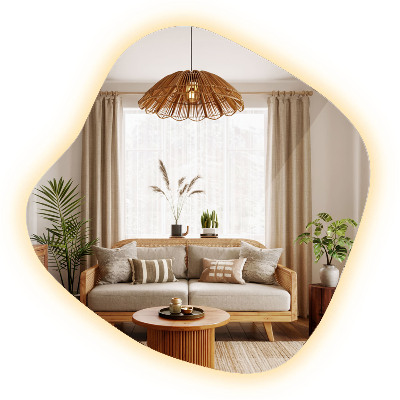
One of the most important reasons why irregular mirrors have become so popular is the growing interest in nature. Organic forms can resemble stones, droplets of water, clouds, leaves, waves, or an irregular shoreline. Such associations introduce calm and gentleness into the interior.
Mirrors inspired by nature fit perfectly into the biophilic design trend, which is about building a bond between people and the natural environment. It’s not only about the presence of plants. Materials, light, colors, and organic shapes that affect our well-being also matter.
Soft lines soften raw, minimalist arrangements. Combined with wood, stone, textiles, and a calm color palette, they create a harmonious composition. Mirrors also fit well with the japandi, Scandinavian, modern, and minimalist styles. Their form can be subtle, yet it still gives the interior a unique character.
Organic forms - artistic expression and individual character
Mirrors with irregular shapes introduce an artistic element into the space. They are not just a backdrop for the rest of the furnishings. They often become the focal point of the arrangement, around which the entire decor of the room is built.
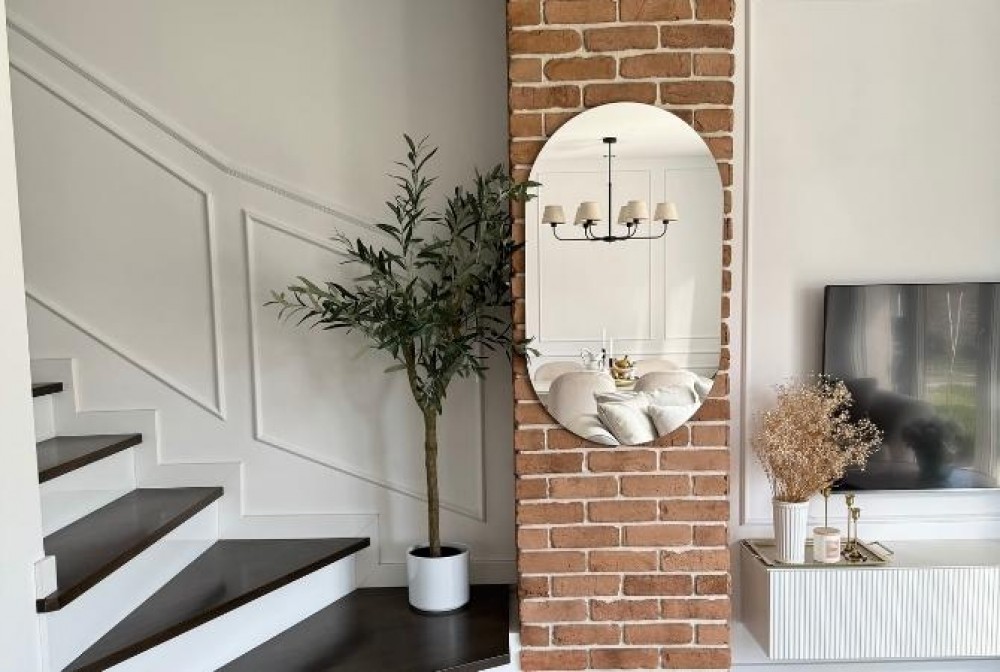
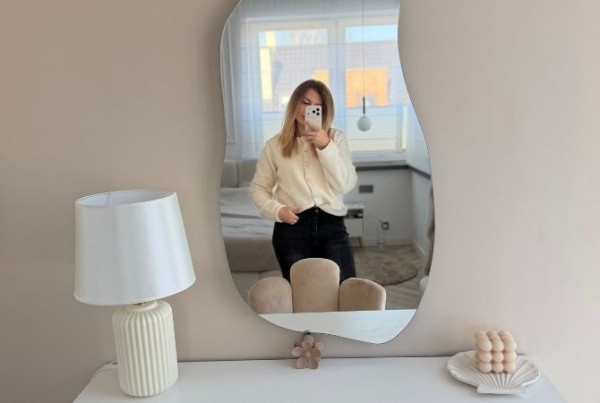
A mirror with an irregular shape can look different depending on the location, viewing angle, and type of lighting. Furniture, lamps, plants, and other items are reflected in its surface, creating changing images. Thanks to this, the decoration is never completely static. It lives with the interior and responds to what is happening around it.
Asymmetrical forms also affect the emotional perception of space. Regular shapes build a sense of order, whereas organic shapes can be associated with freedom, creativity, and nature. That’s why irregular mirrors are eagerly chosen by people who value unconventional design and want to give their home a more personal expression.
More light and a sense of spaciousness
Mirrors have long been used to visually enlarge interiors. In the case of models with irregular shapes, the effect can be even more interesting. Irregular mirrors reflect light at different angles, creating intriguing highlights and visually opening up the room.
In a small living room, a narrow hallway, or a compact bedroom, their presence can make interiors seem brighter and more spacious. A properly positioned pane reflects a part of the room, a window, or a light source, changing the perception of depth.
Mirrors with irregular forms do not create as rigid a boundary as classic rectangular models. Their soft line merges gently with the wall, adding lightness to the composition. It’s an excellent choice wherever a practical solution is needed without visually overwhelming the space.
Fluidity, movement, and dynamism in the arrangement
Asymmetrical mirror forms introduce dynamism and movement into the interior. Even if all the furniture remains stationary, the very line of the pane can suggest fluidity. Irregular mirrors make the composition look neither closed nor predictable.
This is particularly evident in arrangements based on straight lines. Smooth furniture fronts, geometric rugs, and regular wall divisions create an orderly base, while an irregular mirror breaks it with its form. It does not disturb the harmony. On the contrary, it allows you to create a balance between order and freedom.
Such a combination inspires further changes. Sometimes it’s enough to add a rounded coffee table, a wavy vase, or a lamp with a bulbous construction for the entire interior to gain coherence. Mirrors thus become the beginning of a broader metamorphosis, setting the direction for subsequent design decisions.
Irregular mirrors in different rooms
Irregular mirrors are used in many areas of the home. Their function and the way they are presented depend on the size, place of installation, and the users’ individual needs.
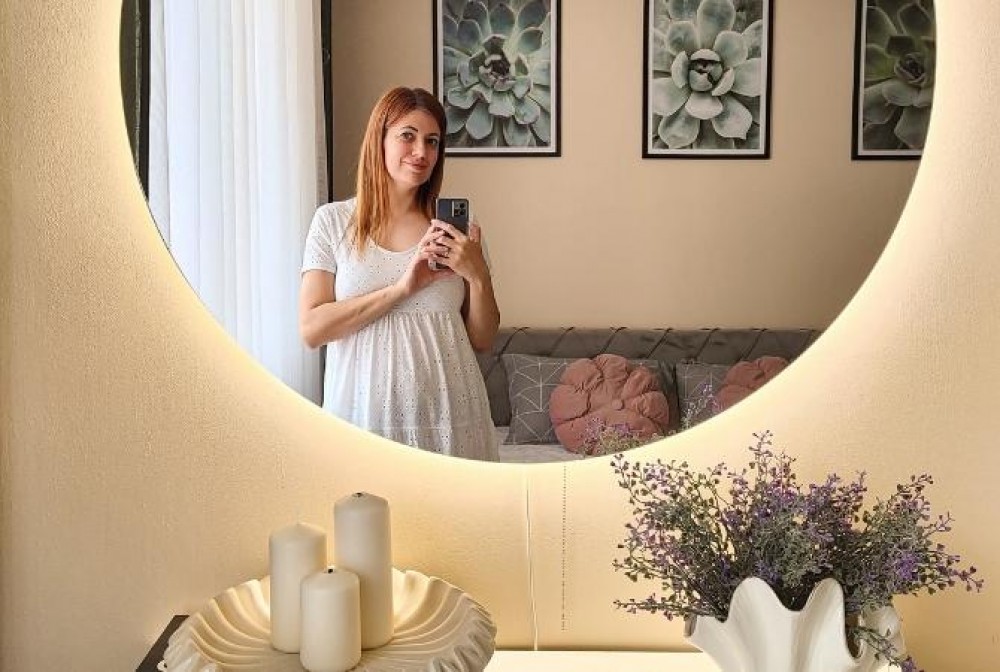
Irregular mirror in the living room - in the living room a mirror can hang above a sideboard, console, sofa, or low cabinet. A large model draws the eye and can serve as the main wall decoration. Smaller mirrors with irregular shapes can, in turn, be arranged into a composition consisting of several elements. In a well-planned pairing with a lamp, plants, or ceramics, the mirror lends the living room modernity and an artistic character. It then becomes clear that functionality and decorativeness do not have to be mutually exclusive.
Irregular mirror in the hallway- the hallway is often small, narrow, and devoid of natural light. A mirror with an irregular shape can visually enlarge this space while also making it more presentable.
Mirrors in the bedroom - in the bedroom, organic forms help build a calm, friendly atmosphere. The mirror can be hung above a dressing table, placed by the wardrobe, or used as a decoration on the wall next to the bed. In this room, soft lines and subtle frames work particularly well. In combination with gentle lighting, light fabrics, and wood, they add coziness and lightness to the interior.
Mirror with an irregular shape in the bathroom - in the bathroom, the mirror still plays a very important practical role, but it doesn’t have to have a standard form. Models in unusual shapes look striking above the washbasin, especially in combination with a simple cabinet and minimalist fittings.
It’s worth taking care of the right light. Lighting placed on the sides or around the pane improves the comfort of everyday activities while also emphasizing its shape. Such a solution gives even a small bathroom a modern, designer dimension.
How to choose the right mirror?
The choice of mirror should depend on the size of the room, its function, and the interior’s style. In large spaces, you can use larger models that will become a bold decoration. In a small interior, a visually lighter form without a massive frame will work well.
Before buying, it’s worth checking what the pane will reflect. A mirror placed opposite a window will bring in more light. A model directed at an interesting decoration, a plant, or an orderly part of the room will emphasize its aesthetics. Conversely, you should avoid locations where the reflection highlights random items or less attractive parts of the arrangement.
The orientation of the form also matters. A vertical mirror can visually increase the room’s height, whereas a horizontal pane allows you to visually widen the wall. Irregularity gives you greater freedom because it does not impose a single, unambiguous direction.
Frame or frameless mirror?
Frames affect the final character of the decoration. A frameless mirror looks light, subtle, and modern. Its irregular edge becomes the most important element of the design. Such models are particularly well suited to minimalist arrangements.
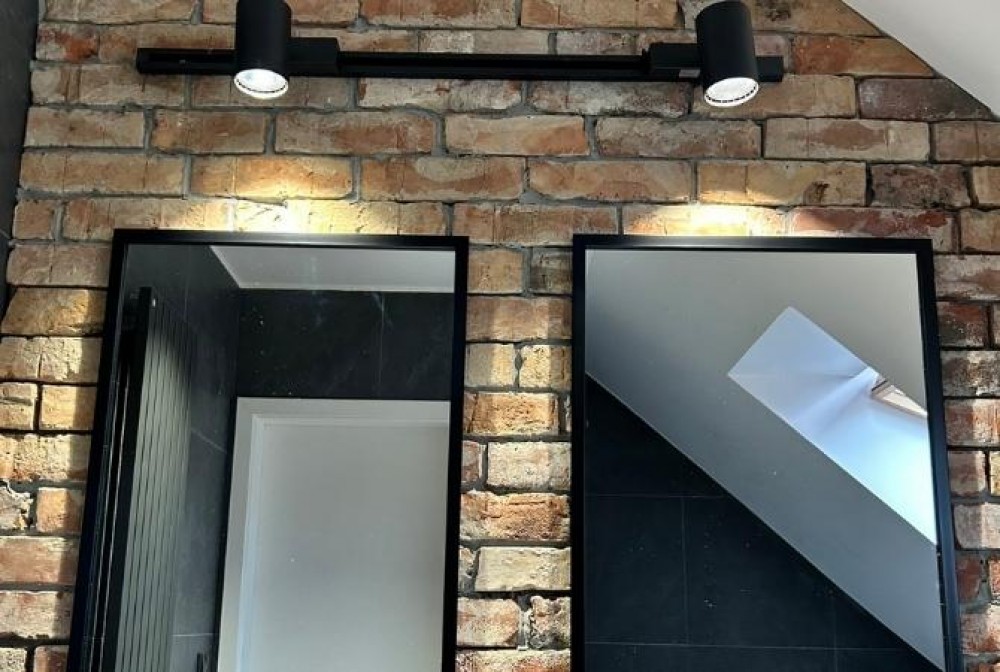
A mirror in a thin metal frame can emphasize a loft, glam, or modern style. By contrast, a wooden finish strengthens the connection with nature and works well with Scandinavian and japandi interiors.
There is no single correct answer. The perfect choice is the one that meets individual needs and complements the other elements of the decor, instead of competing with them.
Are irregular mirrors a passing fad?
Everything indicates that this is not just a short-lived trend. Irregular mirrors respond to several lasting needs of today’s users. They combine functionality with decorativeness, help personalize the space, and suit many styles.
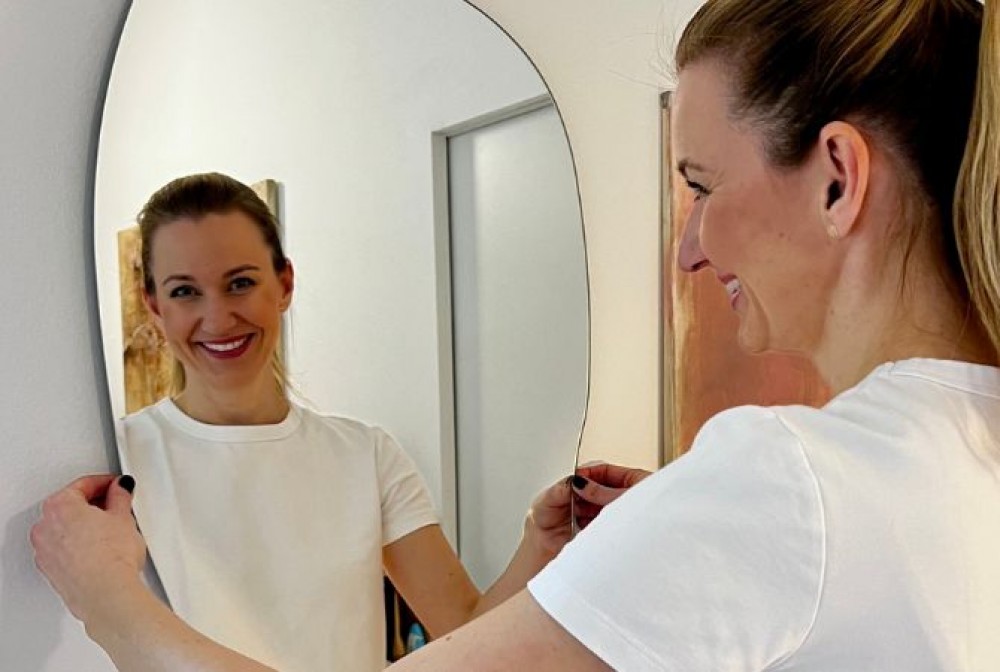
Their popularity also stems from the fact that modern interiors are becoming more welcoming, softer, and more individual. People are increasingly moving away from ready-made schemes and looking for solutions tailored to their own expectations. Mirrors with irregular shapes make it possible to achieve this effect without carrying out an expensive renovation.
Transform your interior with a single detail - the magic of organic-shaped mirrors
Irregular mirrors have changed the way we think about practical objects in interior design. They have proved that a pane can be at once a functional piece of equipment, a wall decoration, and an artistic installation. Organic shapes introduce fluidity, light, and dynamism, breaking the monotony of simple walls and the rigidity of geometric compositions.
Sometimes a single change is enough for a room to start looking completely different. A mirror with an irregular shape can add a touch of freedom to the interior, brighten it up, and give it a new dimension. It’s a solution for people who value original design, want to break patterns, and create a space that meets their own needs.